
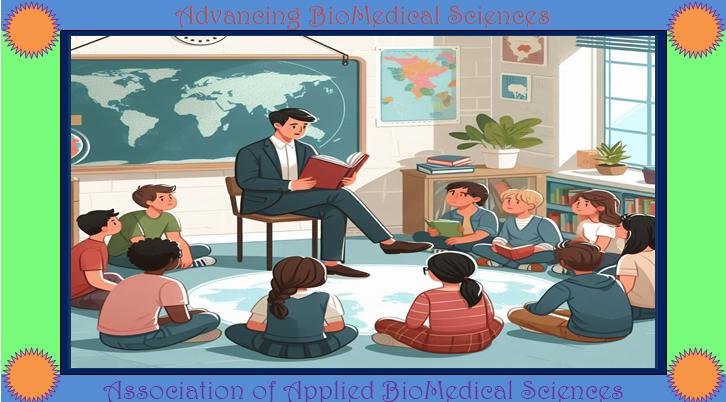
This case study explores the transforming journey of a teacher-student relationship and the effects that it has on both sides, as well as the power of reflective teaching. Sarah, the main character, is an ambitious teacher who starts an internship to further her degree. She meets Mr. Anderson, an experienced teacher who is passionate about reflective teaching, throughout the interaction. Mr. Anderson supports Sarah in using a reflective teaching style as they collaborate, creating a supportive atmosphere for learning and development. This case study explores how reflective teaching has had a significant impact on Sarah’s growth as a teacher and how it spreads throughout the classroom.
1. Introduction
In the realm of education, the teacher-student relationship plays a pivotal role in shaping the learning experience. Teachers who embrace reflective teaching methodologies possess the ability to inspire, empower, and uplift their students. This case study examines the transformative impact of reflective teaching on both an aspiring teacher and her students. The narrative follows Sarah, a young student teacher, as she encounters Mr. Anderson, a seasoned educator renowned for his innovative teaching methods.
ALSO READ: The featured articles published by PSM & Select the best journal for your submission: PSM Journals
2. Background
As a final-year education major, Sarah must finish her teaching internship to put the ideas she has learned in the classroom into practice. She is excited to have a good impact on her pupils’ lives and welcomes the chance to mold impressionable minds. Sarah is nervous and excited at the same time as she enters the classroom for the first time.
Mr. Anderson, a veteran teacher with over two decades of experience, is known among students and peers for his unique approach to teaching. He is highly regarded for incorporating reflective teaching practices into his lessons, fostering a culture of critical thinking, empathy, and self-discovery among his students.
3. The Encounter
Mr. Anderson greets Sarah with a hearty embrace on her first day of class. Sarah’s passion for learning and her dedication to being a successful teacher is immediately apparent to the experienced instructor. Realizing the potential she possesses, he chooses to mentor her.
Mr. Anderson first exposes Sarah to the idea of reflective teaching throughout their conversations. He clarifies that it calls for self-awareness, ongoing self-evaluation, and a readiness to change and advance as a teacher. Mr. Anderson highlights the value of reflective teaching in fostering a supportive learning environment for students by sharing some of his own experiences with it.
ALSO CHECK: Affordable Editing and Proofreading Services
4. Embracing Reflective Teaching
As the day goes on, Mr. Anderson pushes Sarah to include reflective teaching practices in her lesson designs and interactions with students. To continuously enhance her pedagogical approach, he offers advice on how to perform routine self-assessments, reflect on her teaching methods, and ask students for feedback.
Sarah completely agrees with the idea and starts to see a change in her teaching approach. She begins to see how crucial it is to modify her teaching strategies to accommodate the different learning styles and personalities of her students. By using reflective teaching, Sarah can better understand and cater to the unique needs of each of her pupils, which increases their empathy and comprehension.
5. Impact on the Classroom
The dynamics in the classroom start to shift as a result of Sarah’s newly discovered reflective attitude. Her commitment to their development is evident to the students, which makes the class more active and involved. Sarah makes her pupils active participants in their educational journeys by encouraging them to reflect on their own learning experiences.
Mr. Anderson and Sarah work together on a variety of reflective teaching techniques, including peer assessments, journaling, and group discussions. Through these programs, children are allowed to voice their ideas, learn how to think critically, and respect those of others.
6. Transformation and Growth
As the teaching internship progresses, Sarah’s confidence and competence as an educator soar. She no longer fears making mistakes but views them as opportunities for growth and improvement. Mr. Anderson’s mentorship and his emphasis on reflective teaching have played a significant role in this transformation.
Moreover, Sarah’s students respond positively to the new teaching approach. They appreciate being heard, validated, and challenged to think beyond the surface level. Classroom interactions become more vibrant and respectful, creating a positive learning atmosphere.
7. Ripple Effects
Reflective teaching has an effect that goes beyond Sarah’s classroom. Her friends and coworkers are motivated to embrace reflective practices too as they see the great adjustments she has made to her teaching strategies and the classroom atmosphere.
As teachers attend seminars and professional development sessions to learn about reflective teaching approaches, Mr. Anderson’s impact is seen across the school. The management of the school endorses the inclusion of this strategy in the curriculum and acknowledges its benefits.
8. Conclusion
The case study of Sarah’s transformative journey highlights the profound effects of reflective teaching on teachers and students alike. Through the guidance of Mr. Anderson, Sarah evolved from an enthusiastic but uncertain student teacher into a confident and empathetic educator. The adoption of reflective teaching not only benefited Sarah’s personal growth but also positively impacted the entire classroom environment, fostering a culture of critical thinking and mutual respect.
This case study emphasizes the importance of mentorship and innovative teaching practices in empowering aspiring educators to make a lasting impact on their students’ lives. Reflective teaching has the potential to shape the future of education by promoting self-awareness, adaptability, and student-centered learning. As educators and institutions continue to embrace such approaches, the ripple effects will extend far beyond the confines of the classroom, transforming the educational landscape as a whole.
Reflective teaching means looking at what you do in the classroom, thinking about why you do it, and thinking about if it works – study process of self-observation and self-evaluation.
By collecting information about what goes on in our classroom, and by analyzing and evaluating this information, we identify and explore our practices and underlying beliefs. This may then lead to changes and improvements in our teaching.
Reflective teaching is therefore a means of professional development that begins in our classroom.
Read: Fellowship for Postdoctoral Studies at the University of Leeds, West Yorkshire, England
Why it is important
Many educators already reflect on their work and discuss it with peers. “My lesson went well,” “My students didn’t seem to understand,” or “My students were so badly behaved today” are some thoughts or statements you may make.
But if we don’t spend more time thinking about or talking about what has happened, we might be prone to drawing judgments about why certain things are happening. We might only see the responses of the kids who talk more. Thus, reflective teaching suggests a more methodical approach to gathering, documenting, and evaluating our own and our students’ ideas and observations before implementing any necessary adjustments.
- If a lesson went well we can describe it and think about why it was successful.
- If the students didn’t understand a language point we introduced we need to think about what we did and why it may have been unclear.
- If students are misbehaving – what were they doing, when, and why?
Beginning the process of reflection
You can start a reflection process in reaction to a specific issue that has come up in one of your classes, or you might just do it to learn more about how you teach. You may choose to concentrate on a specific student class or examine an aspect of your instruction, such as how you handle disruptive situations or how to get your pupils to use more English in the classroom.
Getting knowledge of what occurs in the classroom is the first step. Here are some methods for achieving this.
Teacher diary
This is the easiest way to begin a process of reflection since it is purely personal. After each lesson, you write in a notebook about what happened. You may also describe your reactions and feelings and those you observed on the part of the students. You are likely to begin to pose questions about what you have observed. Diary writing does require a certain discipline in taking the time to do it regularly for study.
Here are some suggestions for areas of study to focus on to help you start your diary.
ALSO READ: The featured articles published by ABMRC & Select the best journal for your submission: ABMRC Journals
Peer observation
Ask a coworker to see you teach so they may get more information on your lesson. Note-taking or a straightforward observation activity might be used for this. This will have a connection to the topic you chose to consider. For example, you may ask your partner to concentrate on the students who participate most during the session, the various patterns of interaction that take place, or your error-handling strategy.
Recording lessons
Video or audio recordings of lessons can provide very useful information for reflection. You may do things in class you are not aware of or there may be things happening in the class that as the teacher you do not normally see.
- Audio recordings can be useful for considering aspects of teacher talk.
- How much do you talk?
- What about?
- Are instructions and explanations
clear? - How much time do you allocate to
student talk? - How do you respond to student talk?
- Video recordings can be useful in showing you aspects of your behavior.
- Where do you stand?
- Who do you speak to?
- How do you come across to the
students?
Student feedback
You can also ask your students what they think about what goes on in the classroom. Their opinions and perceptions can add a different and valuable perspective. This can be done with simple questionnaires or learning diaries for example. What to do next
Once you have some information recorded about what goes on in your classroom, what do you do?
You may have noticed patterns occurring in your teaching through your observation. You may also have noticed things that you were previously unaware of. You may have been surprised by some of your students’ feedback. You may already have ideas for changes to implement.
Talk
Just by talking about what you have discovered – to a supportive colleague or even a friend – you may be able to come up with some ideas for how to do things differently.
If you have colleagues who also wish to develop their teaching using reflection as a tool, you can meet to discuss issues. Discussion can be based on scenarios from your classes.
Using a list of statements about teaching beliefs (for example, pairwork is a valuable activity in the language class or lexis is more important than grammar) you can discuss which ones you agree or disagree with, and which ones are reflected in your own teaching giving evidence from your self-observation.
Read
You could determine that you want to learn more about a particular topic. These days, there are a tonne of websites dedicated to English instructors where you may get additional scholarly publications or helpful teaching ideas. Additionally, there are teacher periodicals with articles covering a variety of subjects. For English language instructors, there are a tonne of books available if you have access to a library or bookstore.
Ask
Pose questions to websites or magazines to get study ideas from other teachers. Or if you have a local teachers’ association or other opportunities for in-service training, ask for a session on a study area that interests you.
Conclusion
Reflective teaching is a cyclical method since it restarts the reflective and evaluation cycle as soon as changes are implemented.
- What are you doing?
- Why are you doing it?
- How effective is it?
- How are the students responding?
- How can you do it better?