
An analysis of higher education system in Pakistan from a critical perspective

Higher Education System

Higher education is defined as ‘’any type of education offered in post-secondary institutions of learning, usually at the end of a course of study, a degree, diploma, or certificate of higher education.’’ Junior colleges, technological institutes, and teacher training schools are examples of higher education. In addition to universities and colleges, higher education institutions also include a variety of vocational schools that offer training in disciplines including law, theology, medicine, business, music, and art. Junior colleges, the Institute of Technology, and teacher training institutions are examples of higher education. Higher education is defined by the Oxford Dictionary as “education at a college or a university, especially to a degree level.” Higher education is now essential for Pakistani youth due to the country’s rapid population expansion.

ALSO READ: The featured articles published by PSM & Select the best journal for your submission: PSM Journals

The younger generation is desperate to get a top-notch education from prestigious universities in order to gain support from large corporations. As usual, though, the glass remains half empty. Pakistan’s higher education system is plagued by a number of problems, including bureaucratic “Red Tape” and a lack of related programs. The expensive price structure of the institutions and the traditional methods of instruction further hinder this. Along with low GDP investment in higher education, there is a discrepancy between the capabilities required by the sector and the credentials obtained. Even though our nation’s higher education system has many problems, the required changes can still be made.

The key to restoring Pakistan’s higher education system is a strong commitment to research and development. Additionally, there has been a notable decrease in corporation prices. It is evidently more profitable to concentrate on investing in technology rather than traditional brick and mortar businesses. In this sense, reorganizing the institutions is essential. Our educational system urgently needs to concentrate on developing entrepreneurs, inventors, scientists, philosophers, and writers rather than the objective of landing a job and joining the rat race. The change will be ensured by the policy framework’s implementation.

ALSO CHECK: Affordable Editing and Proofreading Services

Higher Education in Pakistan

There are serious concerns about the quality of higher education in Pakistan. The quality of education provided is still poor even though the number of higher education institutions in the nation is growing. The poor quality of education in Pakistan can be attributed to a number of factors, including outdated curricula, insufficient resources, and a shortage of skilled instructors.

Regarding infrastructure, the nation boasts a diverse array of public and private universities. There is a widespread belief that state-funded public schools are inferior to private ones in terms of educational quality. are typically thought to be of inferior quality than private institutions. Conversely, private schools and universities tend to be more costly and serve a more affluent group of people. This has led to a notable gap in the quality of education offered by public and private institutions and has also exacerbated the nation’s widening class division.

ALSO READ: The Philosophy of Higher Education as a Source of Enormous Potential for Cultural and Socioeconomic Advancement

Lack of resources is one of the main issues affecting Pakistani higher education. Libraries, labs, and lecture halls are among the essential amenities that public institutions lack since they are frequently underfunded. Additionally, a lack of adequate finance has resulted in a scarcity of competent faculty. There is a teacher shortage in several Pakistani universities, which directly affects the standard of instruction given to students.

The inadequate infrastructure in Pakistan is another major problem for higher education. Many colleges and universities lack adequate computer laboratories, libraries, and classrooms. Students find it challenging to obtain the resources they require to excel in their studies when these fundamental amenities are lacking. Higher education cannot be enhanced without the right infrastructure, an appropriate budget, and transparent spending. If we are truly serious about developing high-quality knowledge, libraries, labs, and computer labs must receive special attention because they are the fundamental instruments for knowledge production.

ALSO READ: The featured articles published by ABMRC & Select the best journal for your submission: ABMRC Journals

The dearth of scholarships given to students is another obstacle that is connected to our earlier argument and frequently leads to the creation of subpar and badly written research. There is a general lack of “research culture” at our universities. The reason is that no government wants academics to create policies based on accurate data and research, and even when governments do recruit academics, they only give opportunities to qualified foreigners who are familiar with the state of our universities. However, this justification ought to be sufficient for us to think about this matter and act decisively so that our public institutions can meet our demands to the extent that we won’t require any foreign experts to formulate our policies.
Follow: PSM | Scientific Publisher & Media Group

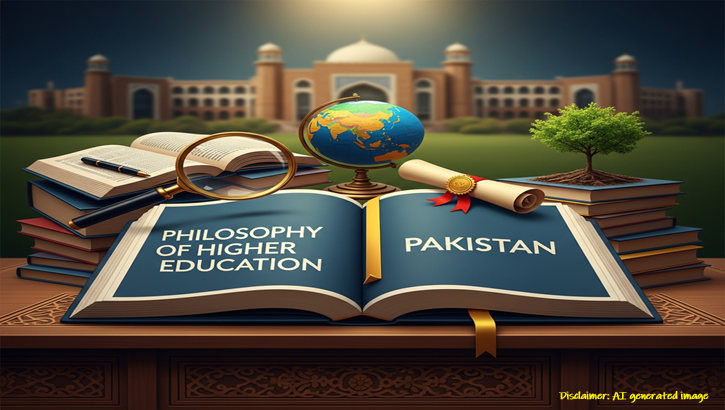
The Philosophy of Higher Education as a Source of Enormous Potential for Cultural and Socioeconomic Advancement

Philosophy of Higher Education

The study of the goals, practices, nature, and tenets of education is a clear definition of the philosophy of education.

The word ‘education’ is derived from one or both of the following concepts:

‘Educare’ – to draw out and realize potential;

‘Educere’ – to bring up and nurture.

Kant’s well-known assertion that the goal of education is to enable mankind to develop and advance

—”Man can only become man by education” (Kant 1803/1960: 6)—

combines these two ideas.

ALSO CHECK: Affordable Editing and Proofreading Services

For thousands of years, the exchange of information and experiences has been essential to human survival and success. From parent to kid, from scholar to student, and from artisan to apprentice, the community’s feeling of shared duty starts at home.

The function and philosophy of education still need to be clearly defined in this era of the internet, where human understanding is found through Google searches. It is suggested that what is required to meet the needs of today’s students can be divided into four categories. The following four pillars emerge from theory or philosophy of education.

ALSO READ: The featured articles published by ABMRC & Select the best journal for your submission: ABMRC Journals

1. Curriculum

2. Teaching Staff

3. Learning Environment

4. Learning Community/Cadre

ALSO READ: Explore the important elements of higher education in Pakistan and the related challenges

These four pillars are significant in educational philosophy as well. The term “philosophy of education” can refer to any specific perspective or approach to education, or it can refer to the application of philosophy to the issue of education, analyzing its definition, objectives, and significance. The academic discipline of philosophy of education is defined as “the philosophical study of education and its problems…its central subject matter is education, and its methods are those of philosophy.”Which of the four components is prioritized or the program’s exclusive focus can reveal a lot about an organization’s or a person’s educational philosophy. It has been noted that many conventional institutions prioritize curriculum quality above all else, treating the material as though it were their exclusive property. Therefore, it is basically believed that education is a process of transferring knowledge from one generation to the next. According to this business model, access to this curriculum is a prerequisite for receiving an education, and fees is required.

ALSO READ: The featured articles published by PSM & Select the best journal for your submission: PSM Journals

Pakistan’s Perspective on Higher Education Philosophy

We must examine higher education philosophy from a Pakistani perspective. As is well known, the rapid expansion of the digital revolution has increased the need for highly educated workers. At the national and international levels, new and common perspectives on higher education have been introduced by globalization, internationalization, and the ideas of lifelong learning. Higher education institutions, particularly universities, must play a major role in the global education map in the quest for excellence.

Our institutions must generate the workforce necessary to compete globally in order to tackle the difficulties posed by the new trends. The significance of higher education in Pakistan is also anticipated in the 1998 Education Policy. The policy places a strong emphasis on higher education philosophy as a source of enormous potential for the nation’s socioeconomic and cultural growth. The availability of computer-based instruction, international student and teacher mobility, and the pursuit of scholarships and outcomes are the key components of the policy pertaining to higher education.

Follow: PSM | Scientific Publisher & Media Group

Fully Funded Scholarships at King Fahd University in Saudi Arabia 2025-26

The King Fahd University Scholarships 2025-26 in Saudi Arabia offer outstanding opportunities for international students looking to further their study at a top-tier university. The entire tuition, monthly stipend, housing, and medical expenses covered by these scholarships make it simpler for talented individuals to follow their academic goals. Renowned for its science and engineering programs, King Fahd University of Petroleum and Minerals (KFUPM) offers a strong foundation for research and development. Apply right away to further your profession and take advantage of these esteemed scholarships.

In Saudi Arabia, obtaining a King Fahd University Scholarship 2025–2026 entails becoming a part of a vibrant and varied academic community. The institution creates an atmosphere that supports academic success by providing state-of-the-art resources and facilities. KFUPM promotes research-driven learning and encourages students to work on innovative projects. Because they are so competitive, these scholarships draw the best students from all around the world. Don’t pass up the opportunity to study in Saudi Arabia and improve your chances by applying for a King Fahd University scholarship.

King Fahd University Scholarships Details

  • Host Country: Saudi Arabia
  • Host University: King Fahd University
  • Study Level: Masters, PhD, Doctorate
  • Eligibility: National & International Students

ALSO READ: Fully Funded Scholarship by the Government of Ireland 2026

King Fahd University Scholarships Benefits

  • Full tuition fee waiver
  • Competitive monthly stipend
  • Free textbooks and educational materials
  • Free furnished bachelor housing
  • Housing for married PhD students (subject to availability)
  • Comprehensive medical care
  • Subsidized meals in student dorm restaurant/cafeteria
  • Additional stipend for participation in funded research projects
  • Developmental programs in teaching, skills enhancement, and research
  • Round-trip air ticket to/from Dammam
  • Opportunities for cultural and academic exchange

Study Areas Covered

  • ​Accountancy ​(M.ACC)
  • Aerospace Engineering (M.Sc)
  • Applied Statistics (M.Sc)
  • Architectural Engineering (M.Sc)
  • Business Administration (M.B.A)
  • Chemical Engineering (PhD, M.Sc)
  • Chemistry (PhD, M.Sc)
  • City & Regional Planning (M.C.R.P)
  • Civil & Environmental Engineering (PhD, M.Sc)
  • Computer Engineering (PhD, M.Sc)
  • Computer Networks (M.Sc)
  • Computer Science (PhD, M.Sc)
  • Construction Engineering & Management (M.Sc)
  • Electrical Engineering (PhD, M.Sc)
  • Environmental Sciences (M.Sc)
  • Geology (PhD, M.Sc)
  • Geophysics (M.Sc)
  • Industrial & Systems Engineering (PhD, M.Sc)
  • ​Information Assurance & Security (​M.Sc)
  • Life Sciences (M.Sc)
  • Materials Science & Engineering (M.Sc)
  • Mathematical Sciences (PhD, M.Sc)
  • Mechanical Engineering (PhD, M.Sc)
  • Medical Physics (M. Med. Phys)
  • Petroleum Engineering (PhD, M.Sc)
  • Physics (PhD, M.Sc)
  • Software Engineering (M.Sc)
  • Systems & Control Engineering (PhD, M.Sc)
  • Telecommunication Engineering (M.Sc)

ALSO READ: Explore the important elements of higher education in Pakistan and the related challenges

Required Documents

  • Complete transcripts from previous degree(s)
  • Degree certificates
  • Statement of purpose
  • Identification (Saudi Citizens: National Identification Card; Residents of Saudi Arabia: Residence Permit/Iqama; International Applicants: Passport)
  • Two recommendation letters
  • Color photograph with white background
  • Curriculum Vitae (CV)
  • English language proficiency certificate (TOEFL/IELTS)
  • GRE (Graduate Record Examination) scores (for relevant programs)
  • GMAT (Graduate Management Admission Test) scores (for Business Administration programs)

ALSO CHECK: Affordable Editing and Proofreading Services

Deadline

The Saudi Arabian King Fahd University Scholarships 2025–2026 application deadline varies according on the program.

How to Apply

Follow these steps to apply for the King Fahd University Scholarships 2025–2026:

Study the requirements for eligibility: Before applying, make sure you fulfil all the requirements for the program you want to apply for.

Chose a Program: Make sure the MS or PhD program you are considering fits with your academic and professional objectives before enrolling.

Assemble the necessary paperwork: Compile the necessary degree certificates, transcripts, a statement of intent, identification, recommendation letters, a curriculum vitae, a certificate of English language competency (TOEFL/IELTS), and any results from standardised tests (GRE/GMAT).

Online Application: Get the online application form from the King Fahd University website. As asked, supply precise and thorough information.

Attach Documents: When submitting your online application, provide all necessary documentation. Make sure they adhere to the required format and dimensions.

Application Submission: Before the deadline, submit the completed application using the online portal when all necessary documents have been uploaded.

Track the status of your application: For regular updates on the status of your application, check your email. The university’s web site might also allow you to follow the progress of your application.

Fully Funded Scholarship by the Government of Ireland 2026

International students can apply for the Government of Ireland Scholarship (GOI-IES 2026) for the 2025–2026 academic year. As a national effort, the Department of Higher Education, Research, Innovation, and Science offers Ireland Government Scholarships across Europe for Master’s and PhD programs. Ireland’s Government Scholarship 2026 Students of all nations, irrespective of gender, race, or nationality, are afforded equal chances through GOI-IES. High-talented candidates interested in postgraduate study and research for development are eligible to apply for these International Education Scholarships (IES) from the Government of Ireland. Under the Government of Ireland International Education Scholarship program, individuals will receive renowned awards for their exceptional research in several fields.

Candidates are strongly encouraged to apply for the GOI-IES program 2026 if they have research interests in cutting-edge sectors that use creative innovation. In Europe, fully funded scholarships are extremely competitive; over the last five years, their success rate has only been 18%. Individuals who will successfully secure European scholarship funding will be recognized as potential world-class research leaders of the future.

Details about Government of Ireland Scholarship 2026

The following is a list of Eligible Universities for Government of Ireland International Education Scholarships 2026.

ALSO READ: Explore the important elements of higher education in Pakistan and the related challenges

  1. American College Dublin
  2. Atlantic Technological University
  3. CCT College
  4. Dublin Business School
  5. Dún Laoghaire Institute of Art, Design and Technology
  6. Dublin City University
  7. Dundalk Institute of Technology
  8. Galway Business School
  9. Griffith College
  10. ICD Business School
  11. Independent College
  12. Mary Immaculate College
  13. Maynooth University
  14. Munster Technological University
  15. National College of Art and Design, Dublin
  16. National College of Ireland, Dublin
  17. University of Galway
  18. RCSI University of Medicine and Health Sciences
  19. South East Technological University
  20. Technological University Dublin
  21. Technological University of the Shannon: Midlands Midwest
  22. Trinity College Dublin
  23. University College Cork
  24. University College Dublin
  25. University of Limerick

Eligibility Criteria

Would you like to apply for the 2026 Government of Ireland scholarships as well? However, because European scholarships are extremely competitive, you should review the Ireland Scholarship’s requirements and criteria.

Applicants must have a domicile outside the EU/EEA/Switzerland/ United Kingdom countries to be eligible for the Government of Ireland Scholarship 2026.
They must carefully check their eligibility before applying for the relevant program and scholarship.
Those who will receive an offer from one of the eligible Irish universities will be eligible to apply for the 2026-GOI-IES.
Applicants must have the status of international fee-paying student.
Applications must be submitted in Irish or English language.
Supervisors and referees must provide a positive report about the applicant to be eligible for the Irish Government scholarship.
Applicants who failed twice after applying for the Ireland government scholarship cannot apply for the same program.
Furthermore, applicants must not have previously availed themselves of the Irish Research Council scholarship.
International applicants can apply for the master-taught research program, postgraduate diploma and PhD degree.
Applicants must have an excellent academic record to be eligible for the Ireland scholarships for international students 2026.
ALSO READ: Fully Funded Scholarships at King AbdulAziz University, Saudi Arabia 2025

Scholarship Benefits

  1. Irish government scholarships offer full tuition fee waiver for successful international applicants.
  2. Registration fee waiver.
  3. €10,000 as a stipend for the whole duration of the fully funded scholarship in Ireland.
  4. The Government of Ireland International Education Scholarships 2026 is an opportunity to study in Europe.
  5. Exposure to international academic and career opportunities through this Irish scholarship.
  6. The 2025 GOI-IES will help you to become a part of an international network.

Ireland Government Scholarship 2026 Requirements

  1. Statement of Purpose
  2. Language proficiency
  3. Additional documents (if needed)
  4. Transcripts
  5. Reference letters (2)

Scholarship Deadline

The Government of Ireland International Education Scholarship 2026 deadline is 23 October 2025.

Application Process

The application process for this Government of Ireland Scholarship is online.

Fully Funded Scholarships at King AbdulAziz University, Saudi Arabia 2025

The King Abdulaziz University Scholarship in Saudi Arabia is fully funded and offered to postgraduate students enrolled in any major academic program, including business administration, computer engineering, science, humanities, and the arts, among many others. The King Abdulaziz University postgraduate scholarship is open to students with any educational background. Given how competitive the King Abdulaziz scholarship is, candidates must have an exceptionally strong academic record. International applicants for this King AbdulAziz Postgraduate Scholarship in Saudi Arabia will be chosen on the basis of their academic prowess, enthusiasm, and other attributes; there will be no gender discrimination against male or female applicants. For master’s and doctoral programs, King Abdulaziz University offers scholarships that last two and three years, respectively.

King Abdulaziz University is a Saudi Arabian public institution located in Jeddah. KAU aspires to contribute to the nation’s and the world’s growth by offering top-notch research and teaching facilities. They provide several programs that are pertinent to the demands of the economy and society. Additionally, they give students the education and training they need to be successful in the workforce. For KAU students, the institution also offers a secure, wholesome, and appealing atmosphere. In order to encourage cultural awareness through academic programs, cultural events, and other activities, King Abdulaziz University provides several scholarships for overseas students. One of the greatest scholarships available in Saudi Arabia for foreign students to study for free is the completely financed scholarship offered by King Abdulaziz University.

Details About the King AbdulAziz University Scholarship 2025

Master’s Programs:

For details about master programs, click here.

PhD Programs:

For details about the King Abdulaziz University Scholarship eligible PhD programs, click here.

Duration of King AbdulAziz University Scholarship 2025

Master’s program: 2 years

PhD program: 3 years

Country: Saudi Arabia

Financial coverage: Fully Funded

Deadline: October 31, 2025

ALSO READ: Fellowships for Young Scholars at Université Côte d’Azur in France

Eligibility Criteria

  1. Applicants must have a university degree from an accredited college/university.
  2. Applicants should have an excellent academic record to achieve this Saudi Arabia Scholarship.
  3. Applicants must be international students to be eligible for the KAU Postgraduate program.
  4. Applicants for the master’s programs must be under 35, and for Ph.D. programs must be under 40 years.
  5. Applicants must have good conduct, and they must be medically fit to be eligible for the Study in Saudi King AbdulAziz University Scholarship 2025.
  6. Moreover, they must meet the admission criteria of the King Abdulaziz University.
  7. Applicants must meet the requirements of the program they’re applying for.
  8. Applicants must not have been dismissed from any other university in the kingdom.
  9. Applicants must be proficient in English.

Scholarship Requirements

Documents required for the fully funded King Abdulaziz University Scholarships 2025 are:

  1. CV
  2. Copy of transcripts
  3. Copy of valid passport
  4. Statement of Purpose (English)
  5. Two recommendation letters (academic)
  6. Graduate certificate certified from the Saudi embassy (copy)
  7. English language proficiency (IELTS: 5, TOEFL IBT: 61, TOEFL CBT: 173, TOEFL PBT: 500)

Application Process

Applications for the postgraduate scholarship at King Abdulaziz University must be submitted online.

Click the Apply Now button below to apply online for the King Abdulaziz University Scholarship.

Candidates need to register on the application site or sign in if they already have an account.

After that, launch the application and fill out the appropriate fields.

Attach all necessary files.

Be sure to apply for the King Abdulaziz University scholarship 2025 before the deadline, .

Scholarship Deadline

The last date to apply for the Deanship of Graduate Studies at the King Abdulaziz University is 31 October 2025.

New research shows that Kangaroos form’mom clubs’ to protect off predators, including pestering males

Consider it a “mom club” for kangaroos. When their young are with them, marsupials appear to establish close social groupings with other mothers—and some mothers are obviously more popular, according to a recent research.

The findings, reported this month in Animal Behaviour, give an important glimpse into the marsupials’ “rich social life” and reflect just how sensitive and intelligent they probably are. “If you’re a vigilant mom trying to protect yourself and your young,” he says, “it makes sense to surround yourself with other vigilant moms doing the same thing.”

According to experts, these social gatherings may function similarly to neighbourhood watch programs, protecting newborn joeys from foxes and dingoes while also deterring rowdy males.

Kangaroos live in groups that can reach several hundred individuals, but their one-on-one relationships have been hard to study.

ALSO READ: Researchers can use AI to predict the location of virtually any protein within a human cell

Compared to animals like deer, marsupials are significantly more difficult to catch and tag. Joeys hide in their mother’s pouches, and adult roos’ strong tails—which allow them to leap half the length of a city bus—can hurt or kill them as they try to escape after being darted or trapped.

Bergeron was shocked to discover kangaroo mothers, who had previously been demonstrated to be antisocial, demonstrating long-term female connections similar to those found in dolphins, primates, and other highly sociable, highly cooperative animals. It might be because the kangaroos in the new research dwell in a region with more threatening predators, she speculates, making them more willing to cooperate.

Although additional study is needed, Campbell believes these partnerships will allow females to share watch periods against predators while also “harassing” males who spend their time chasing females, sniffing their pouches, and attempting to mount. Females hop away and may “bark” at males, or even smack them over the head if they won’t take a hint. However, the males follow, forcing the females to jump away once more, Campbell explains. “They get really annoyed.”

Follow: ISA

Explore the important elements of higher education in Pakistan and the related challenges

Higher Education in Pakistan: A Planning Perspective

These days, higher education is regarded as a capital investment that is crucial to the nation’s social and economic advancement. It is primarily the duty of higher education institutions to provide people with the advanced knowledge and abilities needed for positions of responsibility in industry, government, and other professions. The socioeconomic and cultural advancement of the nation can be greatly aided by high-quality higher education. It is possible for the country to become developed in the lifetime of one generation.

Higher education has more significant goals and aims to achieve more than just teaching certain technical skills. The goal might be multifaceted and categorised as cultural, societal, economic, or personal. It is impossible to separate education, and higher education in particular, from its environment and social setting. A nation’s educational system is woven together with its religious, moral, historical, and cultural ethos.

However, two centuries of foreign rule and blind imitation of western attitudes and methods, which are not suited to the genius and spiritual conditions of its people, have spoilt some of the virtues and brought a bad reputation to their intellectual capacities. The people of Pakistan are not lacking in talent or moral qualities compared to any other country in the world. Fortunately, individuals in Pakistan are not innately inept or morally deficient, despite the country’s lamentable educational and intellectual backwardness. ” However, it is essential that the diseases be correctly diagnosed and that the right actions be taken to cure them in light of the diagnosis.

Challenges in Higher Education

The future of higher education rests on how its citizens respond to the enormous challenges it faces from a variety of economic, social, political, and moral shifts.
Pakistan’s educational system faces a number of complex issues, including population growth, resource scarcity, private sector non-participation, shortage of skilled labour, inconsistent policies from different regimes, political instability, ineffective educational management system, resource waste, and inadequate program and policy implementation.

The major challenges in higher education include:

(i) Quantity

The quantitative increase in the post-independence era has been quite remarkable, notwithstanding resource limitations. In addition to the institutions being increased, college and university enrolments have grown at an extraordinarily rapid rate.
People’s growing aspirations and the social, political, and economic factors driving the growth of higher education are the main causes of the quantitative increase. Higher education’s contribution to the improvement of science, technology, and other facets of human progress has been widely acknowledged in the post-independence era.

ALSO READ: Taxonomy of question types: Questions that effectively engage students at different cognitive levels

(ii) Equity

The ideal of equity was severely limited by the unequal distribution of property and productive resources, the general lack of knowledge and awareness among the populace, and the powerful influence that both individuals and groups exerted to serve their own sectional interests rather than the interests of society as a whole.

(iii) Quality

The quality of the commodities and services produced is just as important to the development of society as their quantity. “It improves the people’s quality of life and the overall quality of society.” The philosophical foundation of quality is, as is correctly said, the inherent qualities of a human being to achieve a higher level and the necessity of excellence to reach a higher developmental stage.
Attempts to achieve certain quality goals often limit the scope and deter efforts to achieve quality in many spheres of life. Over the past 20 years, a number of initiatives have been created and put into place to raise the calibre of teachers and their ability to carry out their jobs effectively.

(iv) Student Conflict

The crucial task of resolving student dissatisfaction is one of the difficulties facing higher education. Students feel that the state of higher education in colleges and universities is unsatisfactory. Development is being hampered by a lack of educational and physical amenities. Teachers are less inclined to do several types of research. Higher education institutions employ the majority of incompetent teachers. Many of them lack a thorough understanding of the subject area they taught, and their knowledge of it is limited. “M.Phil and Ph.D. level teachers are incompetent, even in Pakistani universities.” “They find it challenging to conduct research because they are not familiar with research methodologies.”

(v) Emotional Integration

In order to improve emotional integration, education might be quite important. It is believed that education should foster a student’s entire personality rather than only teaching knowledge. “Students, the nation’s future citizens, should receive education on democracy, its principles, and its values in order to develop a sense of justice that supports the growth of national integration, particularly in developing nations that are working to establish a democratic living structure.”

ALSO READ: Commonwealth Split-site Scholarships in the United Kingdom, 2025

(vi) Administrative Reform

Pakistan has been paying more attention to the issues of university administration throughout the past fifteen years or more. “They have also started to realise that a lot of this is because of improper administration and the consequences for the advancement of higher education.”
Even though they are sometimes disregarded, social and cultural considerations play just as important a role in the creation and execution of administrative policy as any strictly technical ones. It is evident from the university administration that the presence or absence of the variables listed below determines whether university administrative changes are successful or unsuccessful. The connections between the policy and these characteristics are neither incidental nor exclusive to the modern era.

(vii) Faculty

According to the overall worldwide norm, the current faculty is extremely tiny. Even by the standards of many third world nations, the teacher-to-student ratio is quite low. Because of the departing teachers, the college’s university education is now of lower quality. “The majority of university faculty members only hold master’s degrees and have little to no experience in higher education or real-world applications.”
Given Pakistan’s growing cost of living, the faculty’s pay, perks, and financial incentives are extremely low. In an attempt to improve educational standards in Pakistan, the Higher Education Commission is employing international academics and providing facilities for its teachers. The aforementioned issue is a major obstacle for Pakistani higher education.

(viii) Educational Policies

The faculty should be primarily in charge of establishing the institution’s instructional policies. Fundamental issues including the curriculum and teaching strategies, resources and assistance for faculty and student research, entrance requirements, etc. are all included in educational policies.

In addition, the faculty should be actively involved in choices pertaining to other issues that might have an immediate impact on the educational policies that it is principally in charge of. ” These issues include significant shifts in the number of students enrolled, modifications to the academic calendar, the creation of new colleges and universities or divisions, the offering of community extension services, and the institution’s taking on of research or service responsibilities to public or private organisations.

(ix) Academic Freedom

In order for researchers, students, and teachers to fulfil their tasks, the right to academic freedom must be acknowledged. the autonomy of academic institutions in setting pay ranges, conducting tenure research, and appointing professionals. In a new state where the majority, if not all, of the costs of a university education are directly borne by the government, it may be challenging for a university to gain and maintain academic independence or autonomy. Rather of focussing on mundane administrative tasks that are handled by the university council, the board of trustees should be more focused on issues that impact the institution’s relationships with external entities and general policy.

ALSO READ: Researchers can use AI to predict the location of virtually any protein within a human cell

(x) Courses and Curricula

The curricula and courses are not designed in line with current higher education standards. Some of the key routes are not continuous. Basic science courses are poorly organised, poorly monitored by the department, and poorly tailored to the needs of the students. Generally speaking, there aren’t enough well-equipped classrooms, faculty and administration offices, or scientific, engineering, and other labs to accommodate the expanding student body and staff.

Higher level workshops are not appropriate for training since the requisite space, tools, materials, and methodologies are not up to par. Another contributing issue is the frequent changes in the study materials and the challenges associated with their availability.

(xi) Budgeting and Financing

A novel idea for higher-level funding and budgeting is at the heart of everything mentioned above. The traditional yearly budget method is arguably the most perplexing and little understood. The budget is a tool for academic planning that can support the unique goals of each college and serve as a practical means of achieving all university objectives. In an ideal world, it would not only ensure the university’s financial stability but also assign accountability and appropriate authority where it can be used most effectively. The goal of the university should be to create a system that can support its own ongoing renewal in the course of its annual operations.

(xii) Population Explosion

Another issue is the rapidly expanding population in South Asian emerging nations and Pakistan, which leads to overcrowding in higher education institutions due to a shortage of these institutions.
Given the ongoing population growth, one of the fundamental challenges is the need for a quantitative expansion of education at all levels.

Follow: ISA

Researchers can use AI to predict the location of virtually any protein within a human cell

A recently published study shows that a protein that is misplaced within a cell can cause a number of illnesses, including cancer, Alzheimer’s, and cystic fibrosis. However, a single human cell has over 70,000 distinct proteins and protein variations, and since researchers can usually only test for a small number of them in a single experiment, manually locating proteins is very expensive and time-consuming.

A new generation of computational methods uses machine-learning models, which frequently use datasets with hundreds of proteins and their positions recorded across several cell lines, to try to expedite the process. The Human Protein Atlas is one of the biggest datasets of this type, listing the subcellular activities of more than 13,000 proteins in over 40 cell lines. Even though the Human Protein Atlas is a huge database, it has only examined only 0.25 percent of all potential combinations of proteins and cell lines.

A new computer method has now been created by researchers from MIT, Harvard University, and the Broad Institute of MIT and Harvard that can effectively explore the remaining unexplored space. Even in cases when neither the protein nor the cell have been studied previously, their technique can predict the location of any protein in any human cell line.

ALSO READ: A study shows Starch-based Bioplastic possibly as toxic as petroleum based plastic

Instead of using an average estimate across all the cells of a particular kind, their method localizes a protein at the single-cell level, going one step farther than many AI-based approaches. For example, following treatment, this single-cell localization could identify the location of a protein in a particular cancer cell.

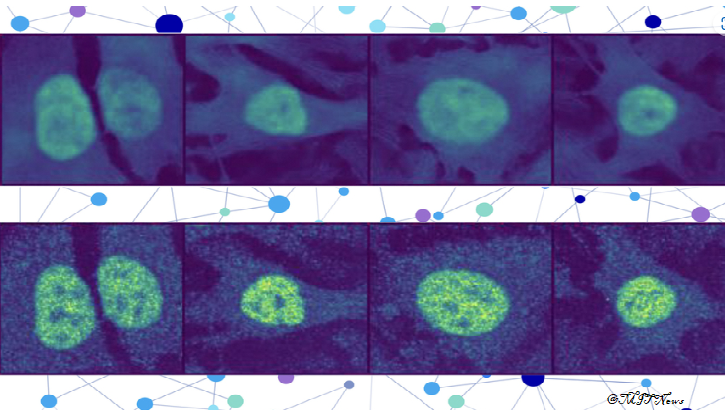
The researchers captured detailed characteristics about a protein and cell by combining a protein language model with a particular kind of computer vision model. When the model predicts the location of the protein, the user is shown with an image of a cell with a highlighted area. This method may help researchers and clinicians more quickly diagnose illnesses or find potential drug targets because a protein’s location indicates its functional state. It may also help biologists better understand the relationship between protein localization and intricate biological processes.

Many protein prediction algorithms now in use are either unable to identify the location of a protein within a single cell or are only able to generate predictions based on the protein and cell data that they were trained on. To overcome these limitations, the researchers created a two-part method for prediction of unseen proteins’ subcellular location, called PUPS.

The first section uses a protein sequence model to capture a protein’s 3D structure and localization-determining characteristics based on the chain of amino acids that makes it up.

In order to fill in the gaps in an image, the second section includes an image inpainting model. By analyzing three stained images of a cell, this computer vision model can determine the cell’s kind, specific characteristics, and the presence of stress.

In order to estimate the location of the protein within a single cell, PUPS combines the representations produced by each model. An image decoder is then used to produce a highlighted image that displays the predicted location.

According to Tseo, “our model is able to understand that nuance,” meaning that various cells within a cell line exhibit different features.

The user enters the protein’s amino acid sequence along with three cell stain images: one for the endoplasmic reticulum, one for the nucleus, and one for the microtubules. PUPS then takes care of the rest.

The researchers employed a few tricks during the training process to teach PUPS how to combine information from each model so that it can make an informed estimate as to the location of the protein, even if it hasn’t seen it before.

Follow: ISA

A study shows Starch-based Bioplastic possibly as toxic as petroleum based plastic

According to a recent peer-reviewed study, starch-based bioplastic, which is marketed as sustainable and biodegradable, has the potential to be just as hazardous as petroleum-based plastic and can result in comparable health issues.

Bioplastics, which are frequently created from plant-based materials like cornstarch, rice starch, or sugar, have been hailed as the plastic of the future since they decompose more quickly than petroleum-based plastic.

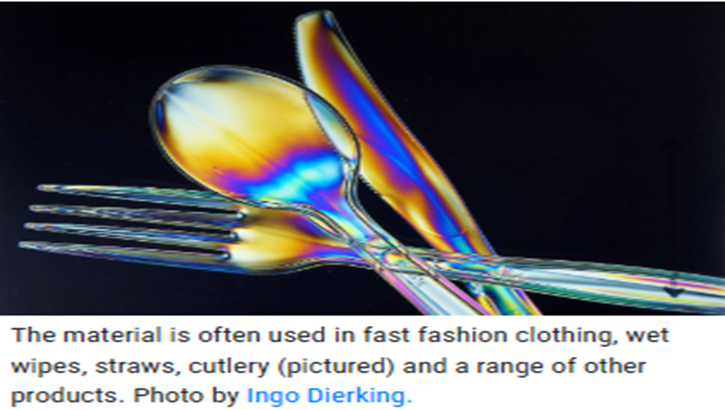
Straws, cutlery, wet wipes, quick fashion apparel, and a variety of other items frequently employ the bioplastic. Among other health problems, the current study discovered alterations in glucose levels and gut microbial imbalances that might cause cardiovascular disease, organ damage, and metabolic abnormalities.

In a press release, research co-author Yongfeng Deng stated, “Biodegradable starch-based plastics may not be as safe and health-promoting as originally assumed.” “Considering their potential for ingestion by accident, this is especially concerning.”

More than 16,000 compounds, many of which are known to be harmful to human health or the environment or lack a public toxicological profile, may be found in plastic, a material that is famously poisonous. Common plasticizers like phthalates and bisphenol are among the most harmful chemicals produced by humans and have been connected to everything from hormone disruption to cancer.

Despite being promoted as a safer substitute, bioplastics don’t decompose as quickly as the industry has stated, according to earlier studies. In the meantime, nothing is known about the toxicity of the substance.

ALSO READ: New research suggests that Venus may never have hosted oceans on its surface

Similar to plastics derived from petroleum, bioplastics can shed and transform into micro-bioplastics. For instance, when clothing is washed, it may shed large amounts of bioplastics, which can then find their way into food and water.

In the latest study, scientists provided food and water containing “environmentally relevant” amounts of bioplastics to three groups of mice for three months, while a third group was given no bioplastics.

They discovered that exposure to plant-based plastic results in many of the same health issues as petroleum-based plastic; the chemicals were detected in the tissue of the mice’s livers, ovaries, and intestines, where they created microlesions.

Researchers also discovered that the group that was fed more bioplastic had greater levels of abnormalities in their livers and ovaries. Additionally, the substance impacted certain abnormalities in gut flora and genetic pathways, which the researchers hypothesize may change circadian cycles.

Although the scientists point out that further study is necessary, the results cast doubt on the safety of common bioplastics. Despite the fact that plastic is hard to avoid in daily life, several experts and campaigners advocate taking action to lessen exposure to it in commonplace items like clothes and kitchenware.

Follow: ISA

Taxonomy of question types: Questions that effectively engage students at different cognitive levels

In education, asking questions is essential because it fosters critical thinking, motivates students to participate actively, and evaluates their comprehension. Different question styles that address different cognitive levels and domains must be used by educators to successfully engage pupils and encourage deeper learning. Classifying and comprehending the various stages of thinking and the objectives of questions is made easier with the help of a taxonomy of question kinds. To improve teachers’ questioning skills, we will examine a taxonomy of question kinds in this article and create five questions for each category.

Multiple approaches to classifying questions exist in the education literature. Questions are divided into four quadrants with matched criteria in the taxonomy below: Both high- and low-order questions are possible, and their designs can be either divergent or convergent.

A high-order question demands students to recollect information while demonstrating their understanding of the topic, circumstance, or solution to a given problem. In contrast, a low-order question only asks students to recall one item. Students answering a high-order question will need to comprehend how a fact or piece of information relates to the larger context of the scenario.

Read: Various measures to improve your critical thinking skills in the workplace

The descriptor convergent describes the constraints imposed on a particular question’s response. By definition, the right response to a convergent inquiry is more limited; it is often brief, necessitates minimal thought, and needs the respondent to recollect certain factual details from memory. Convergent questions, often known as “closed-ended” questions, are ones in which the teacher expects a predetermined response from the student that calls for minimal original thought. When answering convergent questions, pupils won’t need to come up with a unique response. That is to say, the response will have been given in the context of the instructor’s required readings or lectures.

A divergent question, however, is inherently open-ended. To answer a divergent question, a student must be able to recollect certain facts from memory while also using those facts and other knowledge to further analyze, explain, or extrapolate a topic, circumstance, or issue. Divergent questions are more general, might have more than one solution, and demand a greater degree of thought from the learner.

Knowledge-Based Questions

Knowledge-based questions evaluate students’ fundamental retention and comprehension of factual data. Usually, these inquiries ask students to recall or regurgitate particular facts, definitions, or ideas. They concentrate on remembering and comprehending, which are at the lowest levels of Bloom’s taxonomy. Five knowledge-based question examples are as follows:

  1. Define photosynthesis.
  2. What is the capital city of France?
  3. Name three properties of acids.
  4. What are the main branches of the U.S. government?
  5. Explain the concept of supply and demand.

Read: Commonwealth Split-site Scholarships in the United Kingdom, 2025

Comprehension-Based Questions

Students’ capacity to analyze and exhibit knowledge of the material they have learned is evaluated through comprehension-based questions. Students must think more deeply and go beyond mere recollection to answer these questions. Concepts are frequently summarized, paraphrased, and explained in comprehension questions. Five instances of comprehension-based questions are as follows:

  1. How would you summarize the main idea of the passage?
  2. Explain the process of osmosis in your own words.
  3. What evidence from the text supports the author’s argument?
  4. Describe the cause-and-effect relationship between two historical events.
  5. How do the protagonist’s actions contribute to the development of the plot?

Application-Based Questions

Application-based questions evaluate how well students use their knowledge and comprehension to address issues or situations in real life. Students must apply what they have learned to novel contexts, evaluate data, and draw connections between ideas to answer these questions. Five instances of application-based inquiries are as follows:

  1. Given a budget of $500, plan a week-long trip to a foreign country, including accommodation, transportation, and sightseeing.
  2. How would you use the scientific method to experiment on the effect of temperature on plant growth?
  3. Design a sustainable solution to reduce plastic waste in your school.
  4. Analyze a historical event and discuss its relevance to current political issues.
  5. Create a persuasive argument for or against a controversial social issue.

Analysis-Based Questions

Analysis-based questions evaluate students’ capacity to dissect intricate data into its component elements and look for connections, trends, or causes and effects. Students must use critical thinking skills to answer these questions, assess the evidence, and make inferences from their study. Five instances of queries that are based on analysis are as follows:

  1. What are the main factors contributing to climate change, and how do they interact with one another?
  2. Analyze a work of art, discussing the artist’s use of color, composition, and symbolism.
  3. Compare and contrast two historical figures in terms of their impact on society.
  4. Evaluate the strengths and weaknesses of a scientific experiment’s methodology.
  5. Critically analyze the ethical implications of a controversial technological advancement.

Read: New research suggests that Venus may never have hosted oceans on its surface

Evaluation-Based Questions

Evaluation-based questions test students’ capacity for judgment, evaluating the worth or quality of an item, and presenting evidence to back up their claims. Students are prompted by these questions to exercise critical thinking, weigh opposing views, and support their positions. Five instances of inquiries that are evaluation-based are as follows:

  1. Argue whether social media has a positive or negative impact on society, providing evidence to support your stance.
  2. Assess the effectiveness of a government policy in addressing a social issue.
  3. Evaluate the reliability and credibility of an online source of information.
  4. Debate the ethical considerations of a medical procedure, weighing the potential benefits and risks.
  5. Critique a literary work, discussing its strengths and weaknesses in terms of character development, plot structure, and thematic coherence.

Conclusion

Teachers may create and present engaging questions that appeal to students of different cognitive levels in an organized manner by using a taxonomy of question kinds. Through the integration of many question types into their teaching methodologies, educators may foster critical thinking, deeper learning, and significant evaluation. Knowledge-based, comprehension-based, application-based, analysis-based, and evaluation-based questions provide a variety of cognitive demands and enable the investigation of many facets of students’ comprehension. These five kinds of questions are covered in this post. By carefully using various kinds of questions, teachers may create a stimulating learning environment that encourages students’ intellectual development.

Read our blog: AABMS Blogger