The term “socialization” has different meanings in different communities and for different types of information. As a result, the following are some definitions:
1. Individuals become aware of the actions required of them about the norms, beliefs, attitudes, and values of the society in which they live through the process of socialization.
2. The most significant learning process that a human newborn may go through is socialization, which is how they start to develop the abilities required to operate as members of their community.
3. The processes by which people pick up the norms, values, and duties of their society are referred to as socialization.
4. Socialisation is a methodical learning process. Not every social life skill is imparted to a newborn at once. From simplicity to complexity, it moves forward. Early life (infancy and childhood) is a time when socialization occurs in the “simple,” constrained social environment. The youngster is faced with several challenges to learn and adapt to as this social environment gradually expands.
5. Socialisation: the process by which a person picks up social skills and integrates them into society. The process of socialization is intricate and ongoing. Every one of us is a result of our social experiences.
6. The process of socialization is how adults and youngsters pick up knowledge from one another. Early in childhood, we start learning from others, and most individuals carry on with their social learning throughout their lives—unless they have a physical or mental impairment that hinders or halts their capacity to learn. Learning may be enjoyable at times, such as when we pick up a new skill from a buddy in music, art, or sports. Sometimes social learning is difficult, like the first time we learn not to speed and end up with a hefty punishment.
Read: The need and scope of secondary education system in Indonesia and Germany
7. Socialisation is the process through which humans, as material creatures coexisting with other material creatures, must learn to pattern and modify their conduct to fit the norms of behavior,
8. The method by which people learn the information, vocabulary, social skills, and morals necessary to fit in with the roles and norms necessary for integration into a society or group. It is a result of a mix of demands from other people, and regulations that are enforced both inside and externally. The term “socialization” in an organizational context describes the process by which a new hire “learns the ropes” by becoming aware of the explicit and implicit standards of conduct as well as the official and informal power structure. Also, see the orientation and organizational culture.
9. Socialisation is the generic term used to describe the process of absorbing culture. We pick up the language of the culture we are born into and the roles we are expected to perform during the socialization process.
10. The term “socialization” refers to a broad range of methods and procedures that provide kids the ability to interact with others in their social group. Modern theories of socialization emphasize children’s active participation in helping them make sense of their social environment and create their own identities as members of their social group. Socialization is partly a process of learning and a process of being taught. Strong inclinations exist for individuals to interact and engage with each other over everything else in the environment, even in very young newborns. Babies appear to be sociable creatures from birth.
11. In some ways, socialization may last our entire lives and is also a drawn-out process. This is the case, for instance, when adults engage with individuals from different cultures. We might need to adapt to new behavioral norms even when we join a new social group within our own culture.
12. Socialisation is the process by which a person learns to fit in with a group or society and act in a way that is acceptable to them. The majority of social scientists believe that socialization is a key factor in shaping both adult and child behavior, attitudes, and actions. It sums up the process of learning throughout life.
Role of Socialization
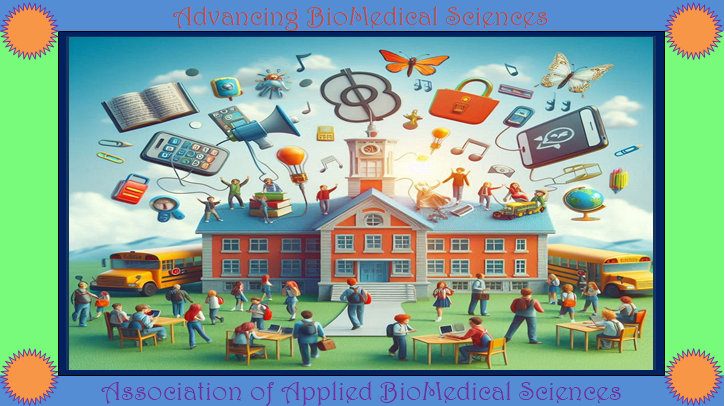
The school plays a significant role in society. Because the school exposes pupils to new experiences and equips them with the skills necessary to assume appropriate social responsibilities after they graduate, it is regarded as a social organization. Because students spend the majority of their waking hours there and use that time to learn, many view schools as second homes. Each learner gains knowledge of social life, social standards, social beliefs, etc., and develops into a social creature. Thus, education plays a big part in the socialization process.
Transmitting information and skills to the next generation is the primary purpose of education. Thus, the younger generation may use information and skills during the socialization process. To enable them to live by their own beliefs and understanding, they are made aware of social rights, laws, and social beliefs. As a result of their cognitive development, their conduct serves as recreation.
The school preserves the social legacy of the community as well as its moral authority. The school passes on its social legacy to the next generation. Thus, it raises a person’s awareness of the moral influence and social legacy of society. The historical continuity of society is safeguarded by education. It serves the purpose of preserving behavioral patterns in the form of traditions and rituals and introducing the next generation to old myths and stories. As a result, kids learn about historical myths, tales, and conduct, which influences how people act in social situations.
Schools are social institutions that function similarly to families in that they socialize students and give them experience with social control. As such, students will learn to accept the kind of social control that is imposed on them in school and will also demand similar social control from society. For this reason, democratic countries strongly advocate for a democratic school climate, which exposes students to democratic norms of social control and is crucial to the socialization process. As a result, kids acquire socialization skills by learning how to interact with one another and live according to democratic standards.
Students’ physical, mental, emotional, and social growth is encouraged at school. For example, curricular activities like puzzles, games, group discussions, and sports connected to the curriculum are among the many extracurricular activities that schools offer to their pupils to support their physical, mental, and social development. Co-curricular or extracurricular activities, such as debate, elocution, competition, sketching, etc., help students develop their unique talents and distinctive distinctions while also helping them enhance their physical, social, and cerebral competencies. Additionally, they cultivate attributes of political, social, and other leadership that, taken together, serve to socialize everyone and assist in making them more like human beings.
Through the planning of student unions, social service camp events, parent-teacher associations, and other events, the school creates a social environment before pupils. For schools to foster social dealing in all students, they must instill all the socially acceptable virtues, such as empathy, cooperation, tolerance, social awakening, and discipline. The school develops a kid by these goals and values, operating within the framework of societal norms. The school encourages kids to get involved in community or government-organized youth welfare programs and libraries.
The school creates a favorable environment because it brings the little school life into active and vibrant interaction with the larger world outside. Students become more responsible when they are given independence by their headmasters and professors. They instill in students an understanding of social norms and traditions as well as social ideals.
The classroom, the teacher, and the school and society are the three subtopics that make up the significance of the school as a socialization agency. A child’s first experience being supervised by someone other than a relative is often when they start school. Probably the first institution that helps kids form attachments and feelings that connect them to a larger social structure is their school. Establishing social interactions should start with the school, which serves as a socialization agent. Most people believe that a child’s first exposure to peer socialization occurs in the classroom. Many people believe that children are most comfortable interacting with their peers in the classroom. Children need to learn how to handle more structured group situations since they will be doing most of their work in the company of their classmates in the classroom. The adjustment to school is influenced by parental expectations and views of their children’s cognitive and motor ability development.
Classroom humor addresses socialization, which is one of the main purposes of education: educating and acclimating newcomers to our culture so they may be informed, perceptive, sympathetic, and caring. The child’s social development is significantly influenced by the instructor as well. Teachers have a crucial role in supporting children as they strive to strike a balance between compliance and rebellion if that is one of the objectives of adolescence. Teachers who use humor to address a negative student typically discover that it works well to defuse the student’s rage and animosity. It is quite probable that a teacher and student can collaborate and make plans together if they can laugh together.
Read our blog: AABMS Blogger