
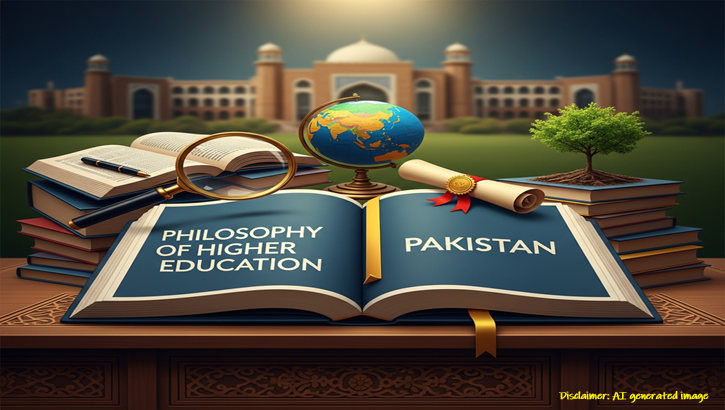
Philosophy of Higher Education
The study of the goals, practices, nature, and tenets of education is a clear definition of the philosophy of education.
The word ‘education’ is derived from one or both of the following concepts:
‘Educare’ – to draw out and realize potential;
‘Educere’ – to bring up and nurture.
Kant’s well-known assertion that the goal of education is to enable mankind to develop and advance
—”Man can only become man by education” (Kant 1803/1960: 6)—
combines these two ideas.
ALSO CHECK: Affordable Editing and Proofreading Services
For thousands of years, the exchange of information and experiences has been essential to human survival and success. From parent to kid, from scholar to student, and from artisan to apprentice, the community’s feeling of shared duty starts at home.
The function and philosophy of education still need to be clearly defined in this era of the internet, where human understanding is found through Google searches. It is suggested that what is required to meet the needs of today’s students can be divided into four categories. The following four pillars emerge from theory or philosophy of education.
ALSO READ: The featured articles published by ABMRC & Select the best journal for your submission: ABMRC Journals
1. Curriculum
2. Teaching Staff
3. Learning Environment
4. Learning Community/Cadre
ALSO READ: Explore the important elements of higher education in Pakistan and the related challenges
These four pillars are significant in educational philosophy as well. The term “philosophy of education” can refer to any specific perspective or approach to education, or it can refer to the application of philosophy to the issue of education, analyzing its definition, objectives, and significance. The academic discipline of philosophy of education is defined as “the philosophical study of education and its problems…its central subject matter is education, and its methods are those of philosophy.”Which of the four components is prioritized or the program’s exclusive focus can reveal a lot about an organization’s or a person’s educational philosophy. It has been noted that many conventional institutions prioritize curriculum quality above all else, treating the material as though it were their exclusive property. Therefore, it is basically believed that education is a process of transferring knowledge from one generation to the next. According to this business model, access to this curriculum is a prerequisite for receiving an education, and fees is required.
ALSO READ: The featured articles published by PSM & Select the best journal for your submission: PSM Journals
Pakistan’s Perspective on Higher Education Philosophy
We must examine higher education philosophy from a Pakistani perspective. As is well known, the rapid expansion of the digital revolution has increased the need for highly educated workers. At the national and international levels, new and common perspectives on higher education have been introduced by globalization, internationalization, and the ideas of lifelong learning. Higher education institutions, particularly universities, must play a major role in the global education map in the quest for excellence.
Our institutions must generate the workforce necessary to compete globally in order to tackle the difficulties posed by the new trends. The significance of higher education in Pakistan is also anticipated in the 1998 Education Policy. The policy places a strong emphasis on higher education philosophy as a source of enormous potential for the nation’s socioeconomic and cultural growth. The availability of computer-based instruction, international student and teacher mobility, and the pursuit of scholarships and outcomes are the key components of the policy pertaining to higher education.




One thought on “The Philosophy of Higher Education as a Source of Enormous Potential for Cultural and Socioeconomic Advancement”