There are two types of socialization agencies: primary and secondary. A child’s family is one of the most important primary agents of socialisation as it introduces them to society. Unlike primary socialisation agents, secondary agents or agencies introduce a kid to an organised setting or institution in a more methodical manner. The finest example is none other than the school, where there are specific guidelines that must be adhered to. A person’s family, school, peers, the media, educational institutions, workplaces, religion, and politics are all important socialization factors.
Role of School
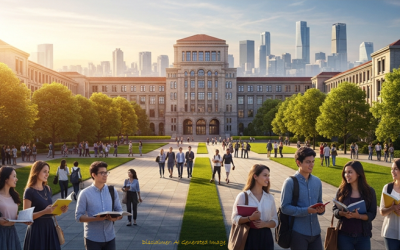
The school is a significant and vital socialisation tool. After living with the family for a long time, the youngster uses school to deepen his connection with the outside world. The youngster attends school from the age of six to eighteen. The school, also referred to as a “microsystem,” is a place where people learn and grow. Individuals acquire information, skills, conventions, beliefs, interests, and attitudes that define them and mould their capacities to carry out adult duties through the intellectual and social experiences they get in school. The goal of education, however, is to produce decent citizens. Only fresh experiences are being taught by a group of teachers in terms of subject matter. However, the child’s emotional attachment to and interaction with the family members continues to wane as soon as they are admitted to the school. The child’s new surroundings help him to improve his talents. He can recognise the school as a place where others value and respect his thoughts and actions at the same time. His personality may be shaped by the recognition, praise, and other benefits he receives. The development of a person’s personality is impacted by imitation. Through extracurricular and subject-oriented activities, the kid gets the chance to interact directly with the instructor. He is driven to emulate his instructors. The personality of the child is formed by following and imitating not only external characteristics of teachers such as accent, behaviour, handwriting, etc but also their ideas and opinions as well.
Role of Mass Media
Theorists, like Parsons, and textbook authors, like Ely Chinoy (1960), and Harry M. Johnson (1961), recognized that socialization didn’t stop when childhood ended. They realized that socialization continued into adulthood, but they treated it as a form of specialized education.
For instance, Johnson (1961) discussed the need to instil a set of principles in US Coast Guard members so that they will obey orders and act without hesitation in unison. Some academics charged that socialisation theorists had failed to acknowledge the growing influence of the mass media as a social force by the mid-1900s. An issue that persists to this day is the relationship between television and children’s education and socialisation, although, in the case of adults, the media was considered more of an informational and recreational tool than a force that shaped personalities.
Read: The contribution of the education system to the promotion of our culture
The ability of mass media as a socialization tool has been acknowledged by many sociologists and cultural theorists. Dennis McQuail acknowledges the concept that the media may communicate norms and values by using symbolic reward and punishment to educate different types of conduct that the media represents. Another way of looking at it is that it’s a process of learning whereby each of us picks up skills related to various roles or social statuses and how to act in those roles and expectations. To avoid having to wait for real experiences, the media constantly presents idealised depictions of life and behaviour models.
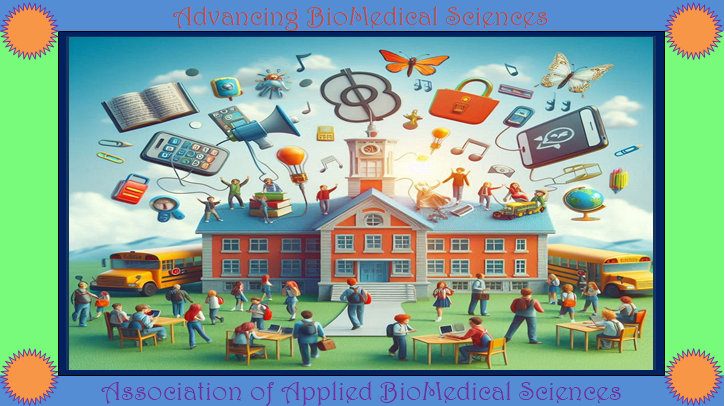
On the other hand, the mass media is the child’s most significant socialisation agent. The many channels that let message senders and recipients communicate with one another are known as the mass media. It is crucial to a child’s socialisation process. There is a wide variety of media available, such as radio, newspapers, magazines, CDs, television, films, and the Internet. These media, particularly television, have distinct effects on the conduct of adults and children. Having the media as one of our primary socialisation agents might harm today’s society. When watching different TV shows seeing all those actors and actresses with these great figures hurt many people in society today. In other ways watching TV could be a good thing when an actor or actress is on TV in different shows or music it could bring many good things like being a role model for an adolescent teenager who wants someone to look up. Having these agents is a great guideline for people who want to start with a great start with their children or want to be a good communicator.
In the US, the majority of families have at least one television on for seven hours every day. The largest form of mass media in a nation is television, which has advantages and disadvantages. Certain programmes are beneficial and provide youngsters with a wealth of information. In addition to learning how to sing, stand up, and pronounce English words, kids may also learn how to speak Spanish. “Blue’s Clues” is another programme that airs on the same channel. Children may learn to think, sing, and find clues in this programme. Children who watch these programmes change because they may learn more and become more informed individuals. These programmes are excellent because they alter children’s perceptions and transform them from their previous selves. But there are also violent television shows that, regrettably, appeal to kids and have a very negative impact on them. Since kids like to copy the combatants, these sorts of shows are not appropriate for them to watch. Children also like watching violent and offensive films, which are abundant in the cinema. Because they watch it on TV, kids adore using knives, weapons, and explosives and pick up these skills. Because they witness their favourite performers wielding these weapons, kids occasionally adopt the role of their superheroes in real life.
Read our blog: AABMS Blogger